
Fridley (763) 213-5458
Timberline Handyman Services
Picture & Mirror Hanging in Fridley

Fridley Local

Picture & Mirror Hanging in Fridley

Level installs on any wall type, from single frames to full gallery arrangements.

Call or text (763) 213-5458

Request an estimate

Tell us what you need
No obligation · Responds within 1 business day


By submitting this form you agree that we may contact you about your request and share your details with partner companies for marketing purposes.

weight assessment work, professional service in Fridley, MN

Fridley's Picture and Mirror Hanging Service

Timberline Handyman Services handles picture and mirror hanging in Fridley and across the north Minneapolis metro. One call covers everything from a single heavy mirror above a console table to a 12-piece gallery wall that needs to land exactly right before you ever drill a hole. I've been doing this work for 16 years, which means I've seen what happens when someone skips the layout step or grabs the wrong anchor for a plaster wall. Call (763) 213-5458 and we'll get it scheduled.

The job looks simple until the mirror is crooked, the anchor pulls out of hollow drywall, or you realize half your gallery wall is half an inch off level across six feet of space. Getting it right means knowing what's behind the wall before anything goes in. Fridley's housing stock runs from 1950s plaster-and-lath to newer drywall construction, and each one takes different hardware and technique. Heavy mirrors above furniture need stud backing or the right toggle anchor rated for the actual weight. Cost on a hanging job varies by number of pieces, wall type, and whether the layout needs to be designed from scratch. Every job is different. Contact Timberline Handyman Services for an accurate estimate.

Wall Type Determines Everything

Fridley homes aren't all the same behind the paint, and the hardware can't be either.
Mid-century homes in Fridley and neighboring Columbia Heights typically have plaster walls, sometimes over lath, sometimes over drywall backer. Standard drywall anchors will strip out or crack plaster if you use them wrong. I assess the wall before I pick any hardware. Brick or concrete block, common on older split-levels and lower levels in this area, needs a masonry bit and the right sleeve anchor. Newer drywall construction is more forgiving but still requires hitting a stud for anything over 20 pounds. I don't guess. I use a stud finder, probe if I need to, and choose anchors rated for the actual load.
back hardware check work, professional service in Fridley, MN

Gallery Walls

Layout First, Drill Second

Every gallery wall gets planned on paper or on the floor before a single hole goes in the wall.

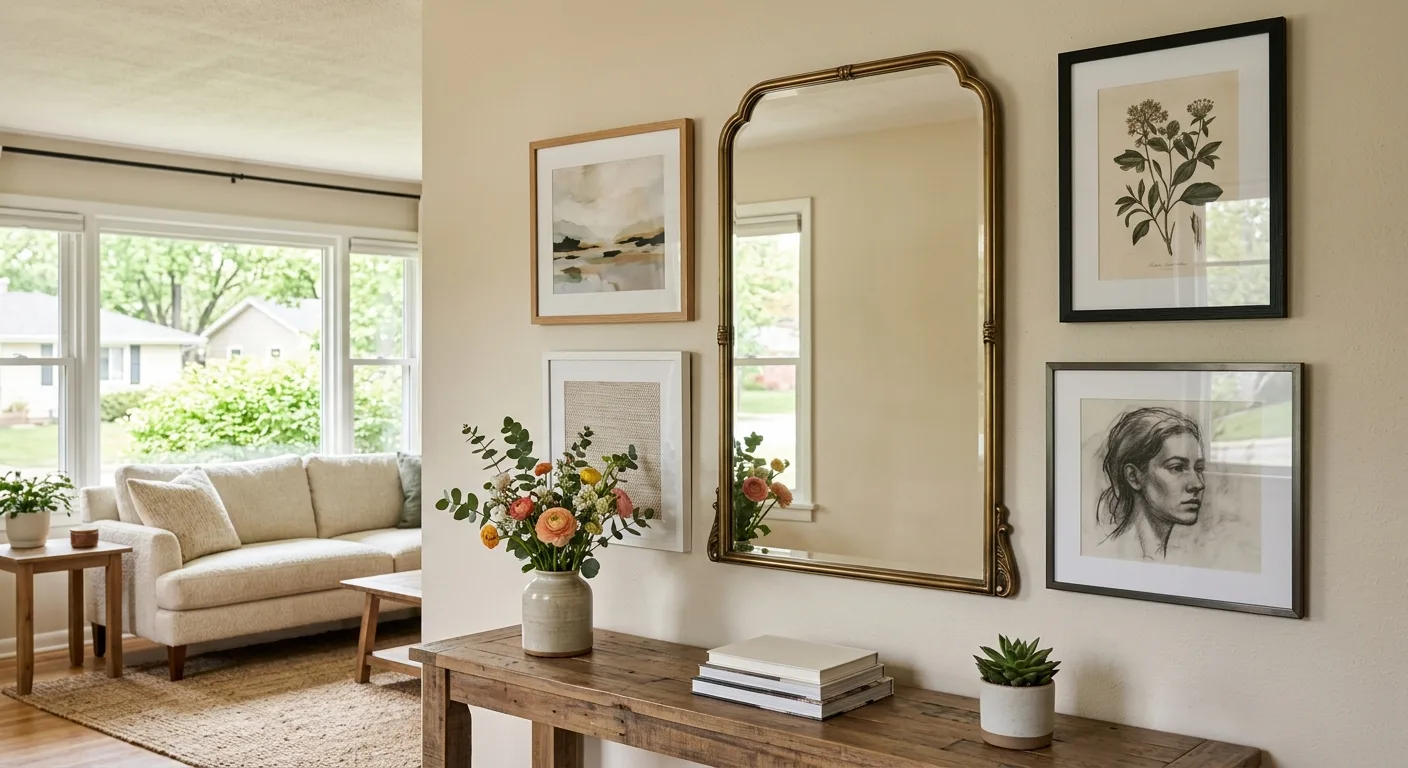
A gallery wall done right starts on the floor. I arrange the pieces, find the spacing that works, and mark the layout before anything touches the wall. Paper templates taped up let you see the arrangement at scale without committing to holes. That step alone saves most people from the patched-over nail collection that builds up when you hang by feel. If you've got a mix of frame sizes, I'll work out the sight lines so the whole arrangement reads as intentional rather than random. For larger installations, caulking and sealing around any anchors or wall plates keeps things clean, especially on older walls.
Handyman work by Timberline Handyman Services

Heavy Mirrors

Safe Hanging for Mirrors Over 30 Pounds

Weight Assessment

Every mirror gets weighed or estimated, then hardware is selected for at least 2x that load. No guessing on safety margins.

Stud or Anchor

Heavy pieces go into studs when possible. When they don't align, I use toggle bolts rated for the actual weight on drywall or plaster.

Back Hardware Check

The wire, d-rings, or French cleat on the mirror itself gets inspected before anything goes on the wall. A weak back connection fails first.

Clearance from Traffic

Placement above furniture in high-traffic spots gets extra attention on mounting depth and fastener count. It has to stay put.

Our Process

How the Process Works

Straightforward from the first call to the last level check.

  1. Assess the Wall

    I check the wall type, locate studs, and confirm the anchor options before any hardware goes in.

  2. Plan the Layout

    For single pieces, I mark height and level. For gallery walls, the layout gets worked out fully before drilling starts.

  3. Install and Level

    Every piece gets hung, checked for level, and adjusted until it's right. I don't leave until it's straight.

Humidity and Seasonal Shift

Minnesota Weather Affects Your Walls

This one doesn't get talked about enough. Minnesota's humidity swings, from dry January air at 20% to humid August days above 70%, cause wood frames, plaster, and even drywall to expand and contract through the year. Over time that movement can loosen anchors, shift a wire on its hook, or crack plaster around a fastener. For pieces hung in exterior-adjacent walls or in older homes with less insulation, I factor this in when selecting hardware and placement. If you're in Coon Rapids or New Brighton in a home built before 1975, this is worth asking about. I've also seen tile backers behind wall surfaces in renovated kitchens and bathrooms, which changes the drill approach entirely. I do tile work as well, so those situations aren't a surprise.
Handyman work by Timberline Handyman Services

When to Call Instead of DIY

Mirror over 40 pounds

The risk of a falling mirror above furniture or in a bathroom is real. Get the hardware right the first time.

Plaster or brick walls

Standard anchors crack plaster and won't hold in brick. Wrong tool choice means patching before you can rehang.

Gallery wall with 6 or more pieces

Layout at scale is harder than it looks. A full arrangement that's off by two inches on one end throws the whole thing.

High walls or stairwells

Working on a ladder over a staircase with a heavy piece isn't a solo job. Two people and the right equipment make it safe.

Ready to Hang It Right in Fridley?

16 years, every wall type, no crooked mirrors.

Frequently asked questions

How do you hang a heavy mirror safely on drywall without hitting a stud?
For mirrors over 20 to 30 pounds that can't land on a stud, I use toggle bolts or snap toggles rated well above the mirror's actual weight. The key is knowing the drywall thickness first, because that determines which toggle works. Standard hollow wall anchors, the ones that come in most hardware kits, are undersized for anything substantial. I also check the wire or bracket on the back of the mirror, because that's often the failure point people overlook.
What hardware works best for hanging pictures on plaster walls?
Plaster walls need a different approach than drywall. For lighter pieces, a hardened picture hook with the right nail angle can work without cracking. For anything heavier, I drill through the plaster and lath to hit a stud, or use a toggle rated for plaster. The wrong anchor will crack the plaster face around the hole, which then requires patching before you can rehang. Fridley homes built before 1970 almost all have plaster, so I deal with this regularly.
How do you plan a gallery wall layout before making holes?
The layout gets worked out on the floor first. I arrange all the pieces, work out spacing and sight lines, then transfer the arrangement to paper templates. Those templates go up on the wall with tape so you can see the full arrangement at scale before anything is drilled. It takes an extra 20 to 30 minutes up front and saves you from a wall full of patched test holes. Once the layout is confirmed, I mark the exact hang points and install everything in sequence.
Can you hang pictures on brick or concrete block walls?
Yes, but it needs masonry hardware. Standard nails and plastic anchors won't hold in brick or block. I use a hammer drill with a masonry bit and sleeve anchors or masonry screws rated for the load. Older Fridley homes with exposed brick in finished basements or on exterior-facing interior walls are common, and the process is straightforward when you use the right equipment. It's slower than drywall work, but the result holds reliably.
Does Minnesota's humidity change how you should hang pictures long-term?
It does, particularly in older homes. Wood expands in summer humidity and contracts in dry winter air. Frames shift on wires, wires stretch slightly over time, and plaster can crack around fasteners in walls that move seasonally. For pieces hung in exterior-adjacent walls or uninsulated spaces, I choose hardware with some tolerance for movement rather than fully rigid mounts. Checking and re-leveling hanging pieces once a year is a reasonable habit in a Minnesota home.
How do you find studs accurately before hanging something heavy?
I start with an electronic stud finder, then verify by feel and sometimes a small probe hole in an inconspicuous spot. Stud finders read inconsistently near outlets, at wall edges, or in plaster, so I don't rely on them alone for heavy pieces. Standard framing puts studs 16 inches apart, but older construction sometimes runs 24-inch spacing. Once I've confirmed stud location and depth, I know exactly what I'm driving into and what anchor to use if the stud doesn't line up with where the piece needs to hang.

Related

Next step

Tell us about the job

Your name, your number and what needs doing. A person from Timberline Handyman Services gets back to you.

Rather talk now?(763) 213-5458

No obligation · Responds within 1 business day


By submitting this form you agree that we may contact you about your request and share your details with partner companies for marketing purposes.